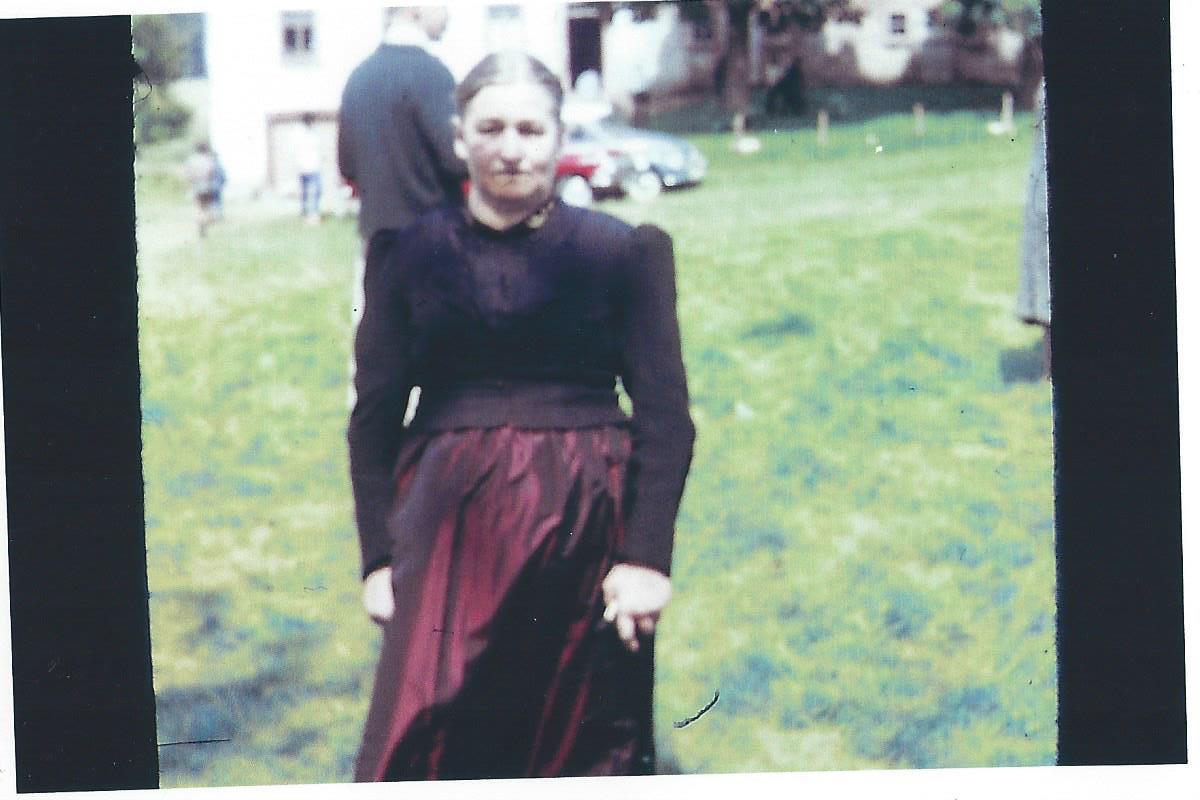
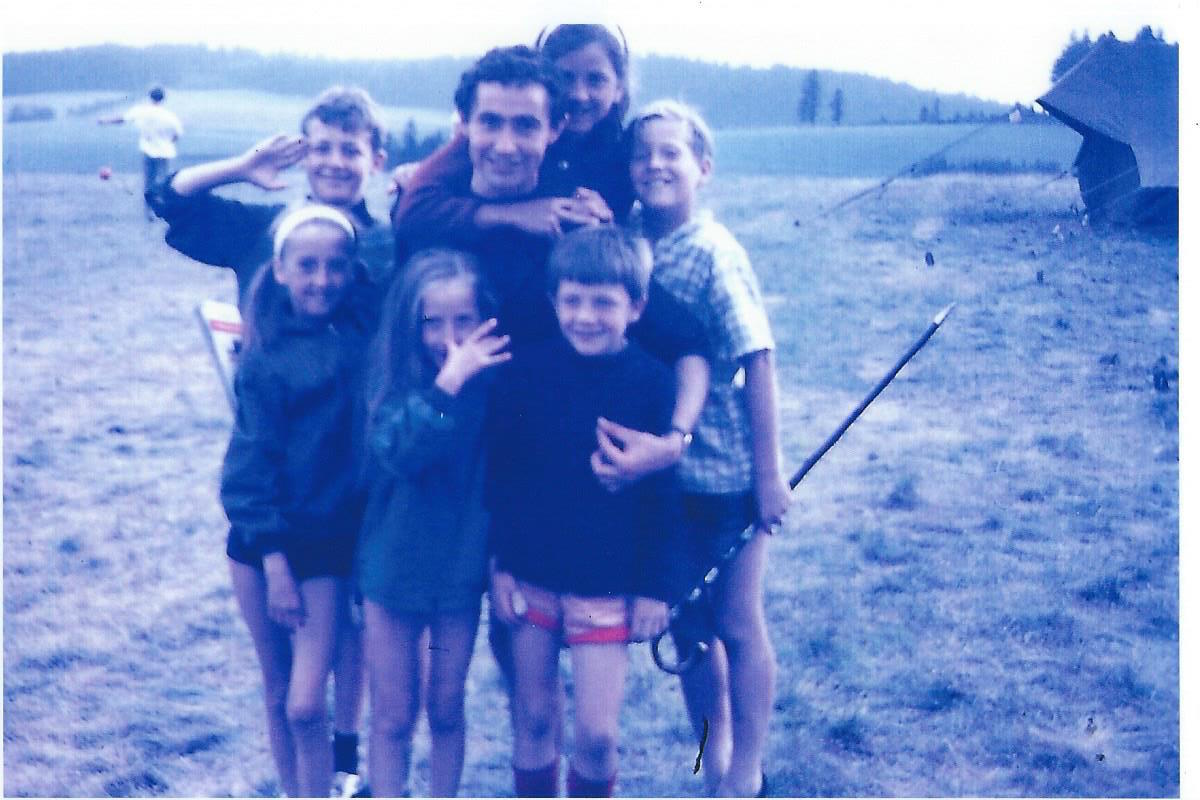
Some correspondence from Christina Szápáry

In March, Christina Szápáry, the niece of the Countess Gabrielle Szápáry, who played an important role in helping to organise and secure funding for the camps, got in contact. She had seen Philip Seddon’s account of a visit he made on behalf of CHV to Vienna in 1969, during which he met the Countess. His notes observed the extraordinary commitment she showed to the work of CHV, which seems to have come about through her links with Caritas in Austria or some personal connections.

Below is the correspondence that followed. Continue reading →

Children’s Holiday Venture: a Student Response to the Refugee Crisis in the 1960s

By Tony Watts, (St Catharine’s, 1960)

Long vacations are precious spaces, providing opportunities for students to engage, alone or together, in exciting projects. In the early 1960s, the massive refugee crisis that had followed the dislocations of the Second World War was still leaving its scars. A group of us at St Catharine’s, led inspirationally by Roger Catchpole (1959, NatSci) and John Foskett (1959, Theology; deceased), decided that was where we wanted to make our contribution.

After the War many refugees were settled temporarily in Austria and Germany in Displaced Person camps, often previous concentration camps, in conditions of abject poverty. Among them were Volksdeutsche – ethnic Germans from Eastern Europe and the Balkans. There were also more recent arrivals, including from the Hungarian Revolution of 1956. World Refugee Year (1959/60) aimed to complete the clearance of people from these camps, but this process continued into the early 1960s. It included provision to help families build their own homes. Our initiative was designed to support this by taking their male children away for a holiday. Continue reading →

Austria camp II, 1967

A report written in 1967 by Glyn Jones and John Grundy

The team consisted of eight Cambridge students – five men and three girls; our camp was based on the ‘Almhütte’ we used last year.

Familiar surroundings were an obvious asset and the simple lay-out of the hut made for convenience.  The cowstall was furnished with rude tables and benches, quickly cleared away to provide space for indoor activities; the kitchen had a large wood-fired cooking stove, which also supplied constant hot water, and a huge copper urn for boiling dirty clothes.  There was a cool larder with running water piped from a mountain stream.  Upstairs there was ample room for stores and extra accommodation in case of wet weather.  A straw-filled cot served as a sick-bay.  Other buildings included a hay barn and a firewood shed.  Behind the hut, a hayfield rose steeply to the mountains; in front the land sloped gently down to the main stream of the valley.  Beyond this stream, crossed by an apparently decaying but immensely solid wooden bridge, lay the field which was the scene of most of our games and around which we pitched the tents.  The site is a perfect natural playground. Continue reading →

Austria camp II, 1966

A report written in 1966 by John Grundy

A 14 year-old Ukrainian boy born in a D.P. camp at Trieste and now living alone with his elderly father in Salzburg, able to speak six languages but prevented from meeting anyone his own age; four brothers from a family of six, the father in a mental asylum and mother desperately trying to support them; two Hungarian brothers whose mother is a prostitute and whose gypsy blood makes it difficult for them to settle in a city, still less a city where a foreign language is spoken and where they have no roots.  These were some of the children who were selected for this year’s second Austrian camp.  Continue reading →

A week in the Lungau

By Graham Fitz (Clare college)

Unfortunately, I was only on one summer camp in Austria (plus an Easter camp to do some repairs to the Dicklerhütte) before taking part in the camps in Langenburg, Germany, in the two following years. I had a job teaching in south Germany, and so was able to keep in touch with the kids between the camps.

I say unfortunately, because I fell in love with the Lungau, the area around Weißpriach where the Austrian camps were held. I determined to go back and explore the region more fully, but, as with many youthful ambitions, the determination became buried in the routine of adult life, and simply was not fulfilled.

In the summer of 2017 I spent ten days in Estonia with Jaan Rajamets, getting to know the country for the first time, and meeting his family there. Jaan and his family were the only people with whom I had kept in touch after my time at CHV and CRI, such is the thoughtless arrogance of youth. While sipping whisky on a hotel balcony late in the bright Estonian evening, the conversation inevitably turned to our times together with CHV, and the Austrian camps. Jaan told me that he had often been back to visit the Landschützers, who ran the pub in Bruckdorf which served as the CHV watering hole, and after a few more drams we had hatched a plan to have a CHV reunion in 2018. Continue reading →

October 2016 update

By Peter Watson

In the months since the last update we have passed an exciting milestone – more than 500 people have now visited this website, from as far afield as the US, Canada and Brazil, across Europe and of course the UK. A clear pattern is emerging of spikes in readership after articles appearing in alumni magazines. While we have been working to alert college magazines to our project, some colleges will only run articles if they are submitted by former members of that college – so if you are in touch with any friends from colleges we haven’t yet managed to alert, do please let them know in case they are willing to assist. Five hundred is a great number but there may be many hundreds more who haven’t yet heard about the archive, and who may wish to contribute, or just to enjoy reading about it. Spread the word!

Over the summer we received two responses to the Homertonian magazine letter, from Barbara Curry (nee Kay) and Jane Bramhill,  who took part in different camps in the 70s. Their contributions can be read here and here. More recently, Angus Tulloch (Clare) got in touch with memories of camps he attended in Austria and near Leeds, and fundraising.

Gordon Edwards and I have both sent round-robin emails to lists of contacts gathered through this project. If you would like to receive an occasional message to keep up with the project then please email via this link with your details.

‘Definitely a character-forming experience’

Angus Tulloch (via email on 19 October)

I certainly enjoyed, and learnt much from, the two and a half camps attended in Austria and the one visited near Leeds in the late 1960s/early 1970s. Clare colleagues also involved included Tom Franklin, Graham Fitt (I think), Jim Kendra, Nigel Whittaker, Charles Stern and Malcolm Sharrock – the latter three forming a fund-raising band mischievously called and advertised in Mariapfarr and Bruckdorf as ‘John Thomas and his Swingers’. I do not think any of the locals clicked though. My job was to chivvy the locals to pay up. Continue reading →

Peter Watson gallery


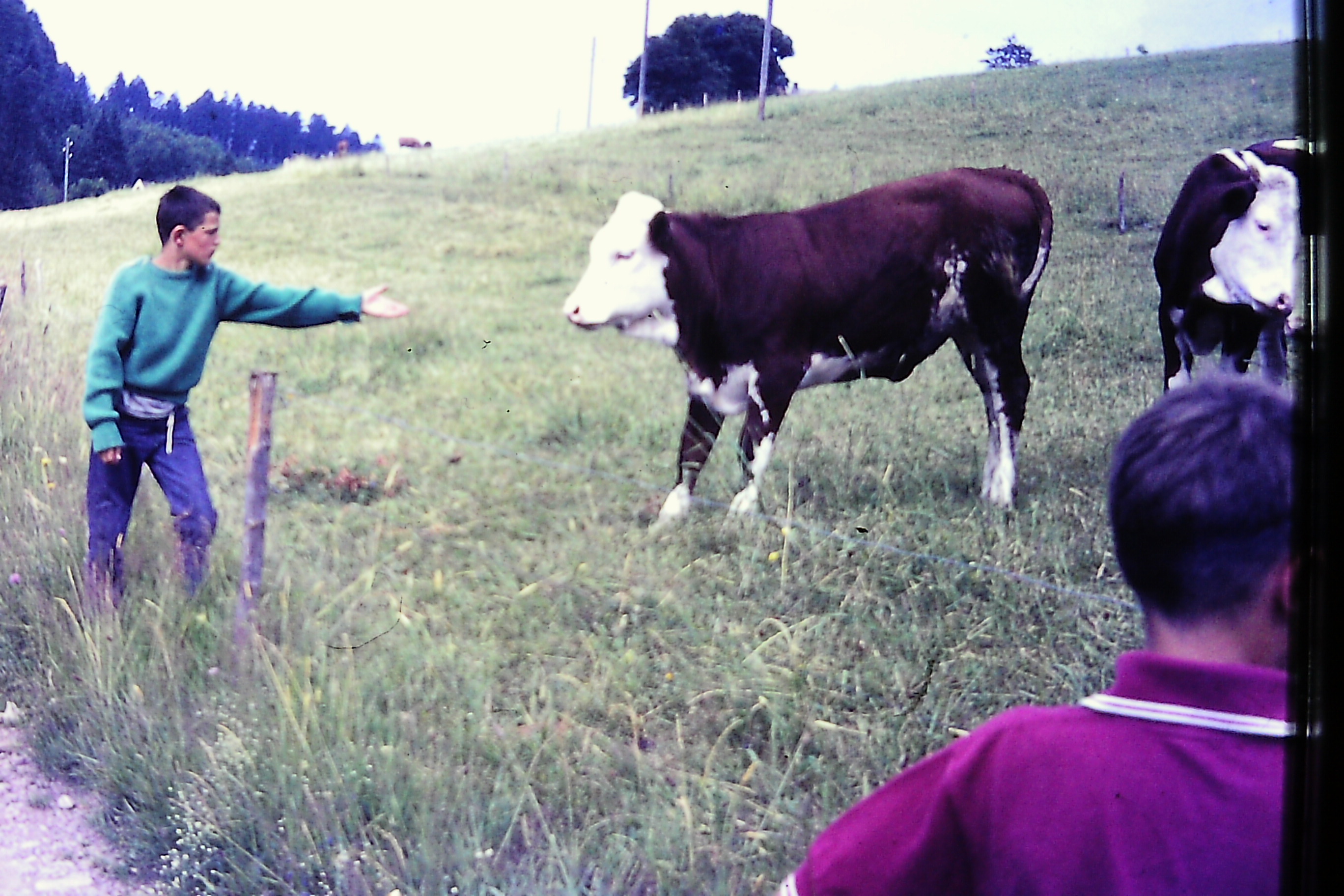
Hello Heifer

Hello Heifer

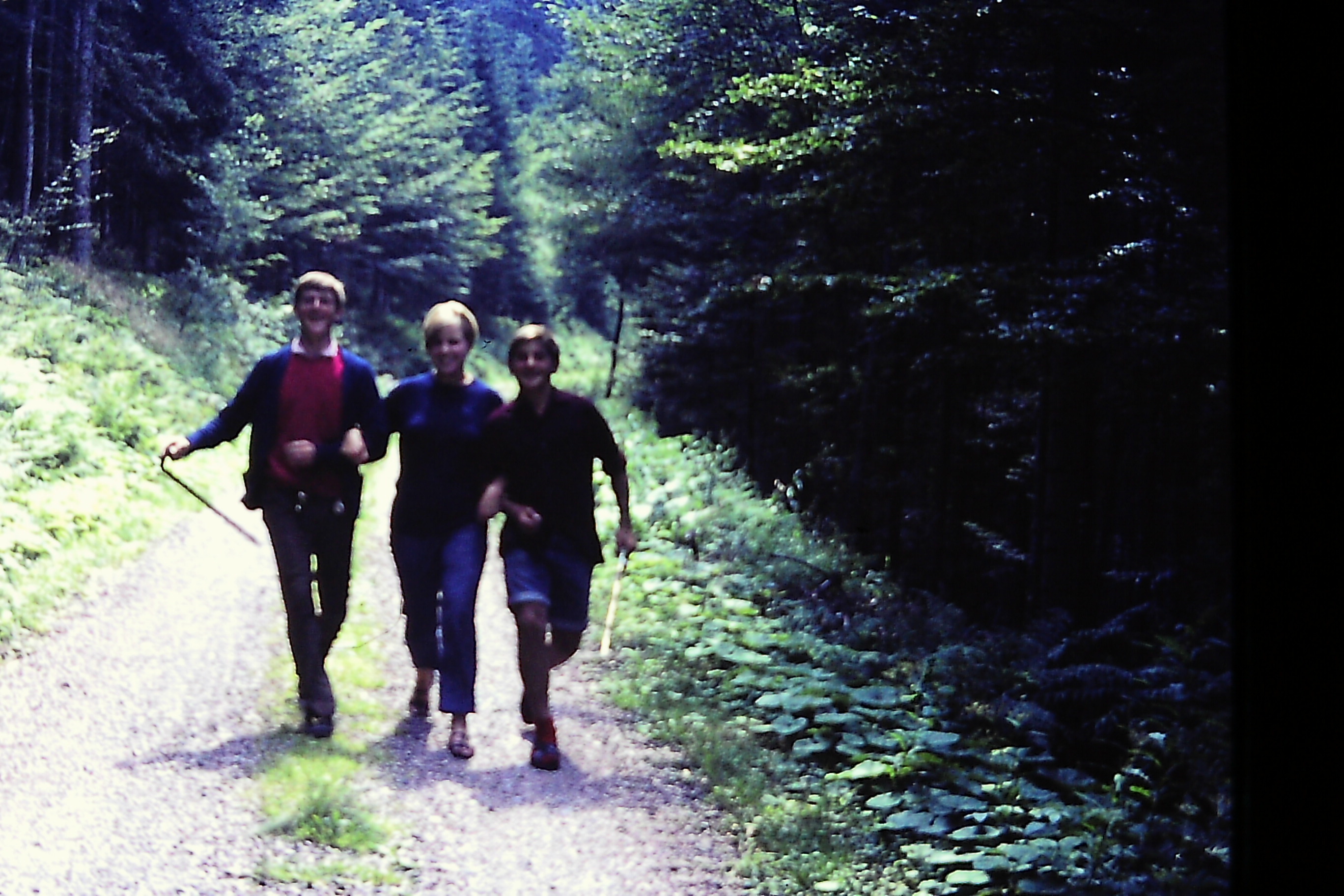
Judi Venner (Homerton mid 60s) with children on a walk in the woods

Judi Venner (Homerton mid 60s) with children on a walk in the woods

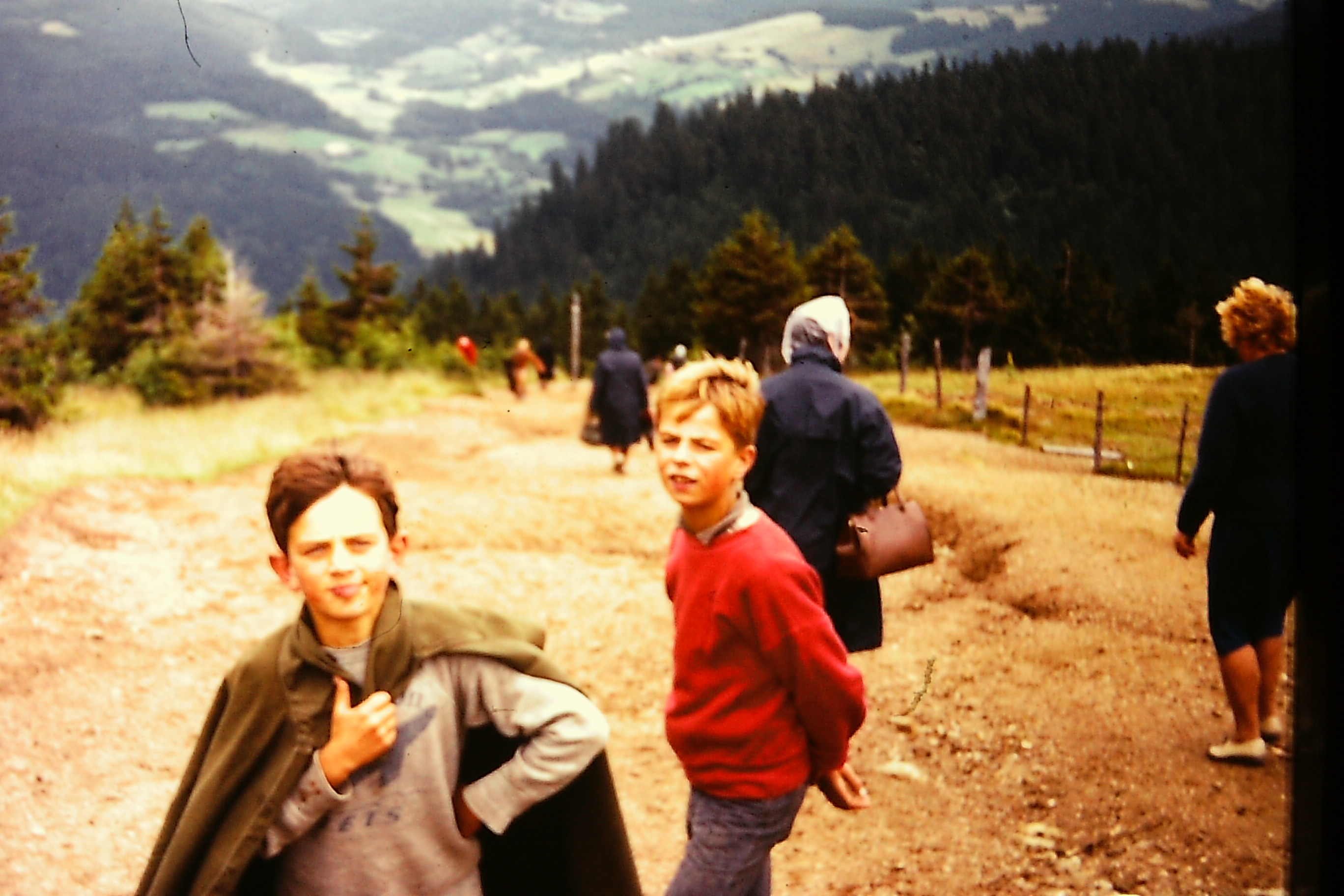
On a walk

On a walk

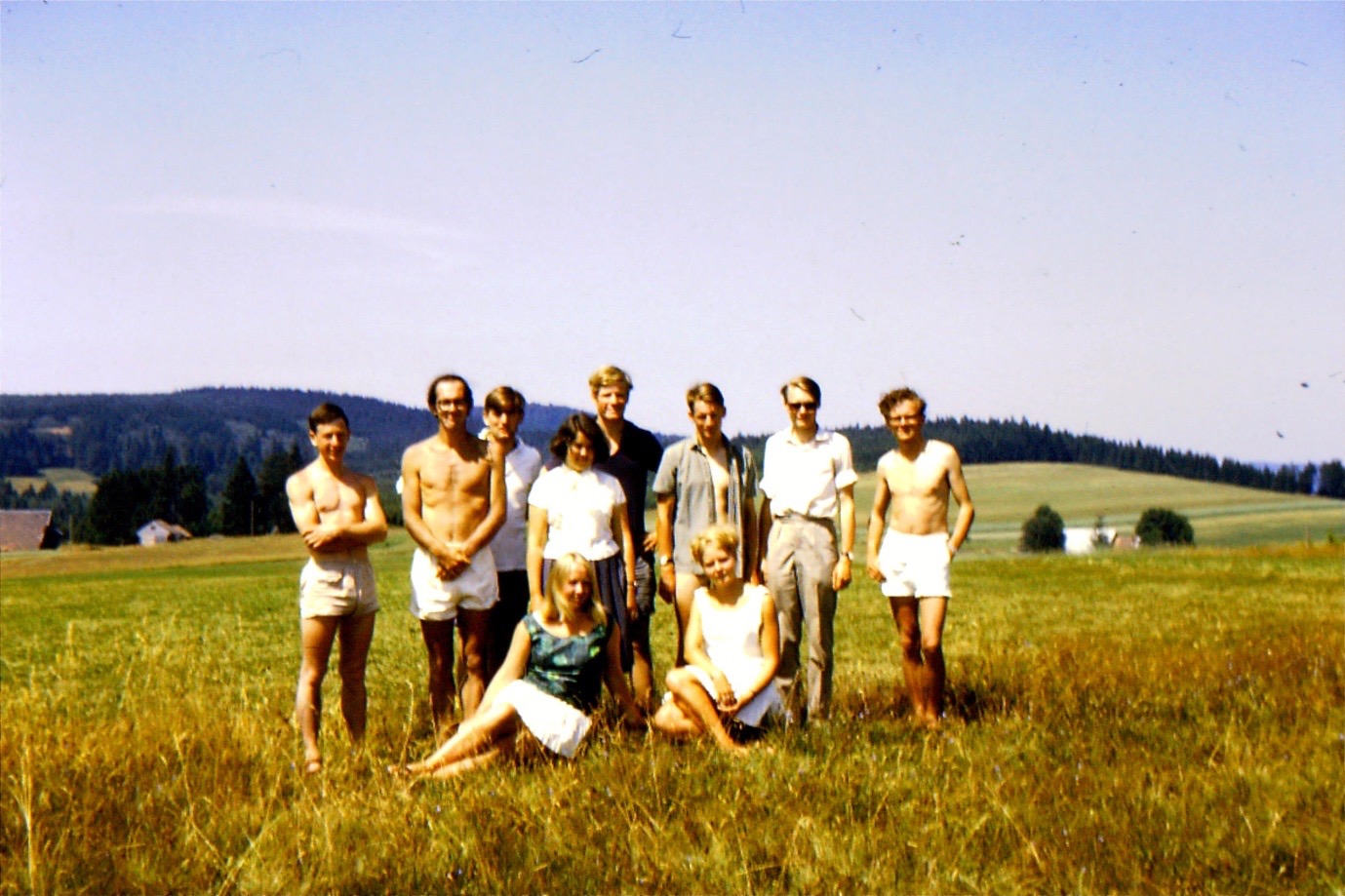
The members of the first 1964 team, pictured at the campsite in the Black Forest. Standing from left to right are: Martyn Edelsten, (visiting from Edinburgh University), Gordon Edwards (Jesus), David Beeby (Jesus), Susan Bennett (Girton), Ian Cooper (Jesus), David Ward (Selwyn), David Thomas (Trinity Hall), Michael Peel (Jesus). Seated left to right are Celia Charnings (Homerton) and Victoria Waterton (Homerton)

The members of the first 1964 team, pictured at the campsite in the Black Forest. Standing from left to right are: Martyn Edelsten, (visiting from Edinburgh University), Gordon Edwards (Jesus), David Beeby (Jesus), Susan Bennett (Girton), Ian Cooper (Jesus), David Ward (Selwyn), David Thomas (Trinity Hall), Michael Peel (Jesus). Seated left to right are Celia Charnings (Homerton) and Victoria Waterton (Homerton)

Frau Saum. She was in charge at the Plattenhof, the Black Forest Camp

Frau Saum. She was in charge at the Plattenhof, the Black Forest Camp

Tony Phelan (Jesus, 1964-1967) with children

Tony Phelan (Jesus, 1964-1967) with children

Group of girls, escorted by David Beeby (standing) and Peter Watson (seated) preparing for a visit to the small Camp. Janet Billingshurst (Homerton mid 60s) with red hair, half hidden by David, and Marj Bannister (Homerton mid 60s) were in charge

Group of girls, escorted by David Beeby (standing) and Peter Watson (seated) preparing for a visit to the small Camp. Janet Billingshurst (Homerton mid 60s) with red hair, half hidden by David, and Marj Bannister (Homerton mid 60s) were in charge

Philip Seddon (Jesus 1964-67) contemplates washing up with two children

Philip Seddon (Jesus 1964-67) contemplates washing up with two children