Children’s Holiday Venture: a Student Response to the Refugee Crisis in the 1960s

By Tony Watts, (St Catharine’s, 1960)

Long vacations are precious spaces, providing opportunities for students to engage, alone or together, in exciting projects. In the early 1960s, the massive refugee crisis that had followed the dislocations of the Second World War was still leaving its scars. A group of us at St Catharine’s, led inspirationally by Roger Catchpole (1959, NatSci) and John Foskett (1959, Theology; deceased), decided that was where we wanted to make our contribution.

After the War many refugees were settled temporarily in Austria and Germany in Displaced Person camps, often previous concentration camps, in conditions of abject poverty. Among them were Volksdeutsche – ethnic Germans from Eastern Europe and the Balkans. There were also more recent arrivals, including from the Hungarian Revolution of 1956. World Refugee Year (1959/60) aimed to complete the clearance of people from these camps, but this process continued into the early 1960s. It included provision to help families build their own homes. Our initiative was designed to support this by taking their male children away for a holiday. Continue reading →

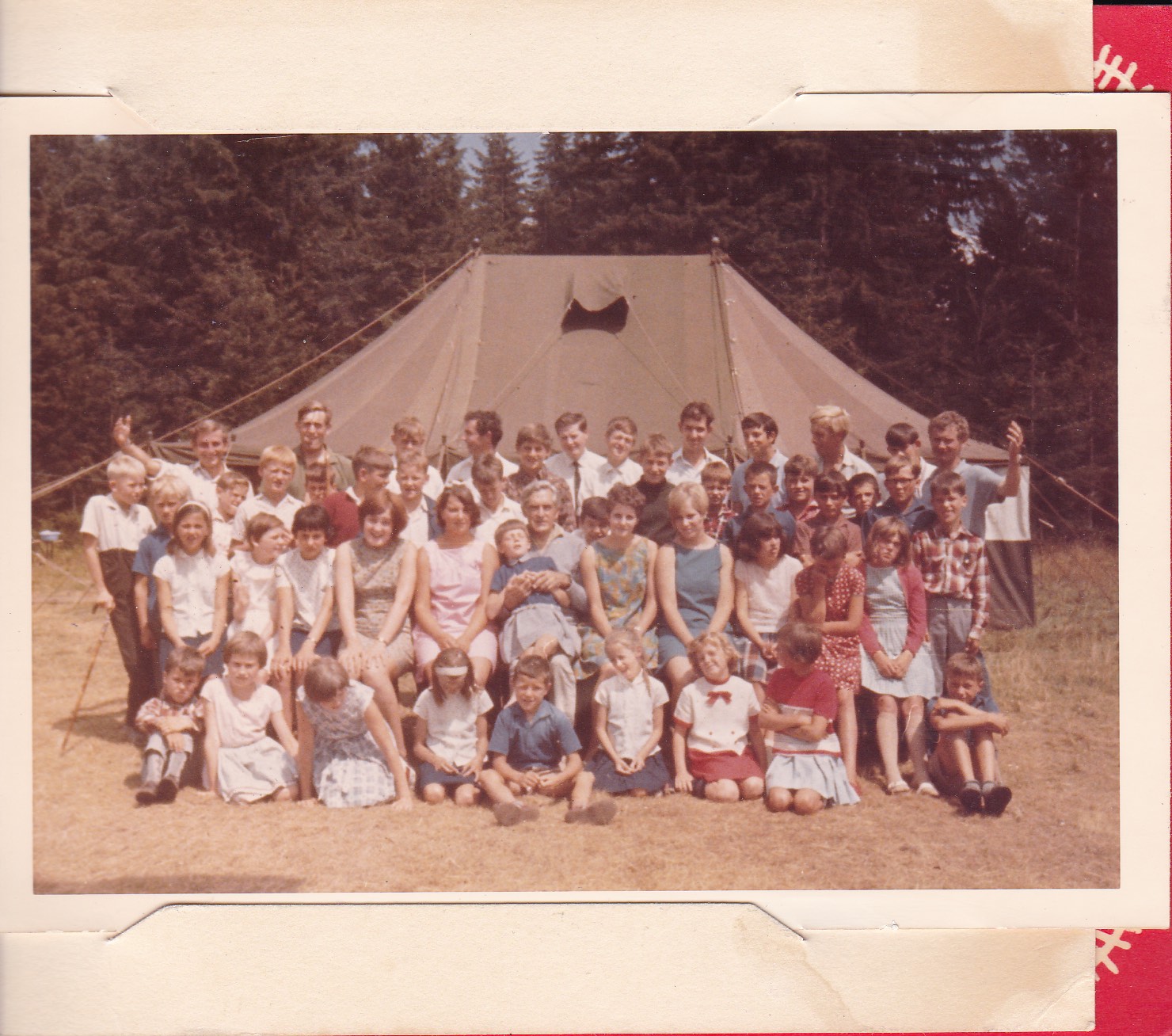
Under canvas on Plattenhof 1965, Camp 1

By Mervyn Bramley (Jesus 1964-67)

Challenged to write my memories of CHV, I looked at the photos I’d taken and, while the memories didn’t come flooding back with great clarity, these four thought bubbles formed.

The camp looked distinctly military when I first arrived at Plattenhof and saw the large khaki ex-army tents at the forest’s edge and the CHV flag flying above them. But the atmosphere there wasn’t – it was friendly albeit necessarily firm at times with the boys.  Continue reading →

Austria camp II, 1967

A report written in 1967 by Glyn Jones and John Grundy

The team consisted of eight Cambridge students – five men and three girls; our camp was based on the ‘Almhütte’ we used last year.

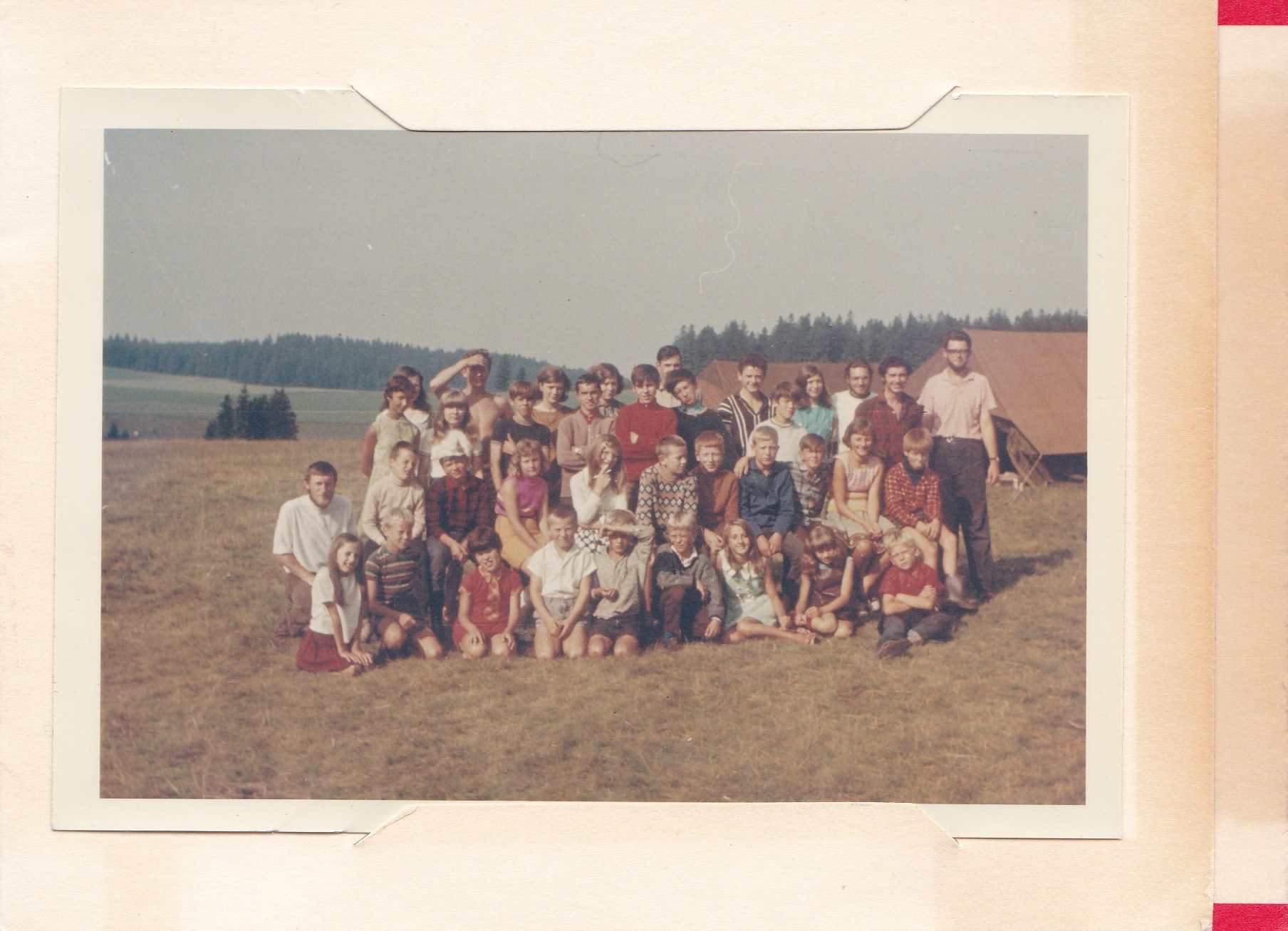
Familiar surroundings were an obvious asset and the simple lay-out of the hut made for convenience.  The cowstall was furnished with rude tables and benches, quickly cleared away to provide space for indoor activities; the kitchen had a large wood-fired cooking stove, which also supplied constant hot water, and a huge copper urn for boiling dirty clothes.  There was a cool larder with running water piped from a mountain stream.  Upstairs there was ample room for stores and extra accommodation in case of wet weather.  A straw-filled cot served as a sick-bay.  Other buildings included a hay barn and a firewood shed.  Behind the hut, a hayfield rose steeply to the mountains; in front the land sloped gently down to the main stream of the valley.  Beyond this stream, crossed by an apparently decaying but immensely solid wooden bridge, lay the field which was the scene of most of our games and around which we pitched the tents.  The site is a perfect natural playground. Continue reading →

Austria camp II, 1966

A report written in 1966 by John Grundy

A 14 year-old Ukrainian boy born in a D.P. camp at Trieste and now living alone with his elderly father in Salzburg, able to speak six languages but prevented from meeting anyone his own age; four brothers from a family of six, the father in a mental asylum and mother desperately trying to support them; two Hungarian brothers whose mother is a prostitute and whose gypsy blood makes it difficult for them to settle in a city, still less a city where a foreign language is spoken and where they have no roots.  These were some of the children who were selected for this year’s second Austrian camp.  Continue reading →

A week in the Lungau

By Graham Fitz (Clare college)

Unfortunately, I was only on one summer camp in Austria (plus an Easter camp to do some repairs to the Dicklerhütte) before taking part in the camps in Langenburg, Germany, in the two following years. I had a job teaching in south Germany, and so was able to keep in touch with the kids between the camps.

I say unfortunately, because I fell in love with the Lungau, the area around Weißpriach where the Austrian camps were held. I determined to go back and explore the region more fully, but, as with many youthful ambitions, the determination became buried in the routine of adult life, and simply was not fulfilled.

In the summer of 2017 I spent ten days in Estonia with Jaan Rajamets, getting to know the country for the first time, and meeting his family there. Jaan and his family were the only people with whom I had kept in touch after my time at CHV and CRI, such is the thoughtless arrogance of youth. While sipping whisky on a hotel balcony late in the bright Estonian evening, the conversation inevitably turned to our times together with CHV, and the Austrian camps. Jaan told me that he had often been back to visit the Landschützers, who ran the pub in Bruckdorf which served as the CHV watering hole, and after a few more drams we had hatched a plan to have a CHV reunion in 2018. Continue reading →